Digital Loyalty Cards vs Paper Punch Cards: Complete 2026 Comparison

Why Digital Loyalty Cards Beat Paper Punch Cards in Every Way
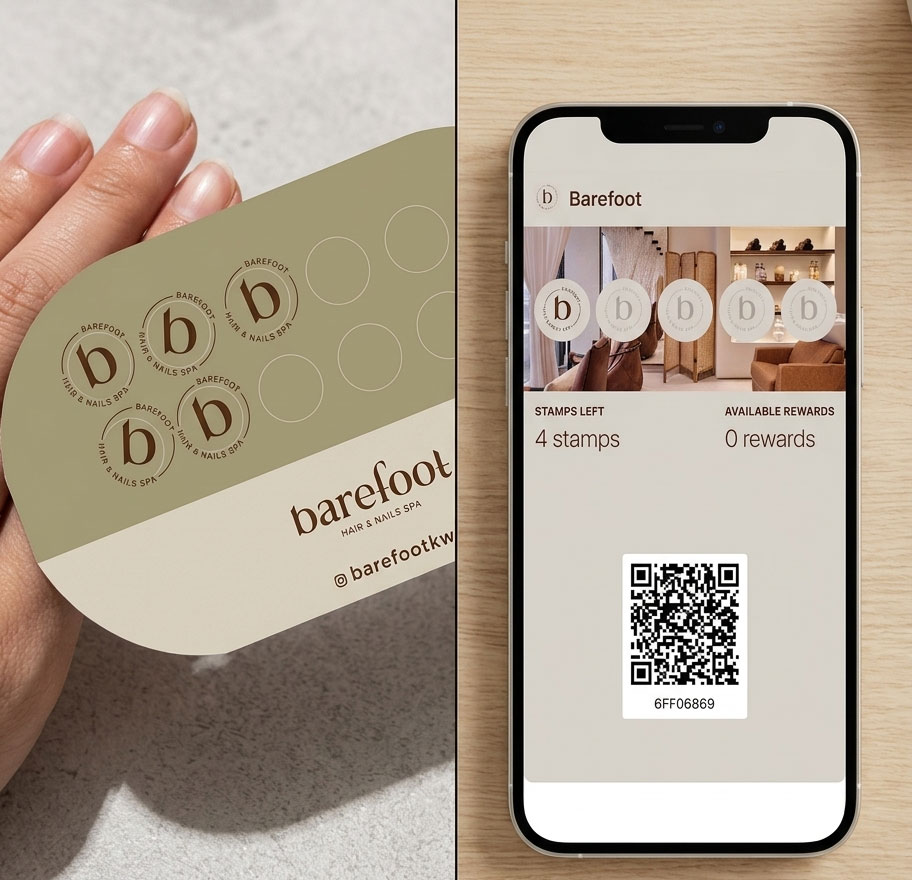
Paper punch cards have been the default loyalty tool for small businesses since the 1980s. Buy a certain number, get one free. The concept is simple, but the simplicity that made them popular is the same thing that holds them back. Lost cards, untraceable visits, zero customer data, and easy fraud are problems every business owner using paper has dealt with.
Digital loyalty cards stored in Apple Wallet and Google Wallet solve each of these problems while unlocking capabilities paper was never designed to handle. This is not a matter of preference. It is a measurable business upgrade backed by real operational advantages.
What Is a Digital Loyalty Card?
A digital loyalty card is a wallet pass stored on a customer's smartphone inside Apple Wallet or Google Wallet. It tracks stamps, visits, or spending toward a reward without requiring a separate app download. The customer scans a QR code or taps a link, and the card appears in their wallet permanently alongside payment cards and boarding passes.
From the business side, every stamp is recorded digitally. The merchant controls when stamps are added, sets the reward threshold, and can send push notifications directly to the customer's lock screen. All of this happens through a dashboard instead of physical cards and rubber stamps.
The distinction matters because digital loyalty cards are not a "nice-to-have" upgrade. They fundamentally change the relationship between a business and its repeat customers by making every interaction trackable, actionable, and personal.
Why Do Paper Punch Cards Fail Small Businesses?
Paper punch cards fail because of structural flaws: customers lose them, staff forget to offer them, fraud is trivially easy, and they generate zero usable data. These are not edge cases. They are the default experience with paper-based loyalty programs, and the problems compound into real revenue loss over time.
Here is how each failure plays out:
Loss. Customers misplace paper cards constantly. They end up in the laundry, forgotten at home, or crumpled in a pocket. When a customer loses their card mid-progress, the loyalty loop breaks. The business loses whatever goodwill those earlier visits built.
Fraud. Paper cards are trivially easy to game. Customers can punch their own cards or find the same hole punch at a stationery store. Competitors have been known to hand out pre-stamped cards to poach customers. There is no audit trail and no way to verify each stamp matches a real purchase.
Data blindness. Paper tells you nothing. You cannot identify your most frequent visitors, spot a customer who stopped coming, or measure redemption rates. You are running a marketing program with zero analytics.
Inconsistency. Staff forget to offer the card. New employees do not know the rules. Some locations stamp differently than others. The customer experience becomes uneven, and the brand suffers.
How Do Digital Loyalty Cards Prevent Customers From Losing Their Card?
Digital loyalty cards eliminate the lost card problem entirely because the card lives on the customer's phone. It sits alongside payment cards and boarding passes in Apple Wallet or Google Wallet. There is nothing extra to carry, nothing to forget, and the card can even appear on the lock screen when the customer is near the business.
Apple Wallet supports location-based notifications. When a customer walks near your shop, their phone can surface the loyalty card on the lock screen automatically. This turns a passive card into an active reminder. For a full walkthrough of how Apple Wallet passes work, see our Apple Wallet loyalty card guide.
Consider a neighborhood cafe. A regular who visits three times a week never thinks about their loyalty card because it is always there. They see their stamp count update in real time. When they are two stamps away from a free drink, the card sits on their lock screen every morning as they walk past. That seamless presence is impossible with paper. If you run a cafe and want to dig deeper into retention tactics, read our guide on how to increase customer retention for your cafe.
Digital vs Paper Loyalty Cards: Side-by-Side Comparison
| Feature | Paper Punch Cards | Digital Loyalty Cards |
|---|---|---|
| Card loss risk | High — customers lose or forget them | None — lives on the phone |
| Customer data | Zero | Full visit history, frequency, spend |
| Push notifications | Not possible | Built into Apple/Google Wallet |
| Fraud prevention | None — self-stamping is easy | Merchant-controlled, full audit trail |
| Setup cost | Printing, design, reorders | One-time digital setup |
| Ongoing cost | Recurring printing | Monthly subscription (unlimited cards) |
| Update flexibility | Reprint entire batch | Instant, free updates |
| Environmental impact | Paper waste, ink, disposal | Zero waste |
| Customer experience | Must carry physical card | Always available on phone |
| Analytics | None | Visit frequency, spend, redemption rates |
This comparison covers the operational reality. In every measurable category, digital cards provide a structural advantage over paper.
Can You Send Notifications to Customers Through a Digital Loyalty Card?
Yes. Apple Wallet and Google Wallet both support push notifications tied to the loyalty card. When a customer adds your card, you gain a direct communication channel to their lock screen. Notifications appear natively, without requiring the customer to open an app, and consistently outperform email and SMS in visibility.
A well-timed wallet notification drives real action:
- "You are 2 stamps away from a free coffee" on a slow afternoon
- Automatic updates when the stamp count changes after a visit
- "Your reward is ready to redeem" when they hit the target
These messages appear where the customer is already looking. They do not get buried in an email inbox or lost in a sea of marketing SMS. The notification infrastructure is built into the wallet apps themselves.
For businesses, this means re-engagement becomes nearly effortless. Instead of hoping customers remember to come back, you remind them at the moment a nudge is most effective. This is particularly powerful for businesses with natural visit cycles: cafes (daily), salons (monthly), car washes (bi-weekly), restaurants (weekly).
How Do Digital Loyalty Cards Prevent Fraud?
Digital loyalty cards tie every stamp to a merchant action through an authenticated system. Only the business can add stamps, and only through verified methods. Each stamp is logged with a timestamp and optional purchase amount, creating a complete audit trail. Customers cannot manufacture stamps or game the system.
Every fraudulently completed paper card is a free product given away without the corresponding revenue. A single-location cafe might lose a few free drinks per week. Scale that to a chain with 20 locations, and the losses become significant. Digital cards close that gap completely.
Amount-based stamping adds another layer of integrity. Instead of "one stamp per visit," you configure "one stamp per 25 SAR spent." The stamp count reflects real revenue, not just door traffic. A customer who places a large order and one who buys the minimum are rewarded proportionally.
What Data Can You Track With Digital Loyalty Cards?
Digital loyalty cards track every stamp, visit, and redemption with timestamps. Businesses can see visit frequency per customer, identify top spenders, measure average time to earn a reward, and track redemption rates. This data turns a simple loyalty program into a strategic tool for growing revenue.
The data has immediate practical value. If most customers drop off at 6 out of 10 stamps, your target might be too high. If redemption spikes on weekends, you can staff accordingly. If a loyal customer has not visited in three weeks, send a push notification to bring them back.
For a salon, this might reveal that clients who book every 4 weeks are the core revenue base, and a loyalty program tuned to that cadence outperforms a generic "visit 10 times" model. For a restaurant, it might show that lunch and dinner customers behave differently and warrant separate reward structures.
Paper cannot provide any of this. Digital cards turn every interaction into an actionable insight.
Key Advantages of Digital Loyalty Cards: Summary
- Always accessible — stored in Apple Wallet or Google Wallet, never lost or forgotten
- Full customer data — visit frequency, spend history, redemption rates tracked automatically
- Push notifications — direct lock screen access without email or SMS costs
- Fraud-proof — merchant-controlled stamping with complete audit trail
- Zero printing costs — no design, printing, shipping, or reorder expenses
- Instant updates — change rewards, branding, or rules without reprinting
- Environmentally friendly — eliminates thousands of paper cards per year
- No app download — works through the wallet already on every smartphone
- Amount-based stamping — reward based on actual spend, not just visit count
- Location reminders — card appears on lock screen when customer is nearby
How Hard Is It to Switch From Paper to Digital?
Switching from paper to digital loyalty cards takes minutes, not weeks. You design your card once, set your stamp rules, and share a QR code or link with customers. When a customer scans the code, the card appears in their Apple Wallet or Google Wallet instantly. No app download required, no account creation, no friction.
With a platform like KARTLE, the full setup involves choosing card colors, uploading your logo, setting the stamp target and reward, and configuring whether stamps are per-visit or amount-based. Then you share a QR code at your counter or a link on social media.
For businesses transitioning from paper, run both systems in parallel for a week or two. Tell existing paper-card customers to switch, and offer a small bonus like starting them with 2 stamps. Within two weeks, most businesses find paper cards are no longer needed.
There is no app for customers to download. No account to create. The card just appears in the wallet they use every day.
Frequently Asked Questions
No. Digital loyalty cards are added directly to Apple Wallet or Google Wallet, which come pre-installed on every iPhone and Android phone. The customer scans a QR code or taps a link, and the card appears in their wallet instantly. No app store visit, no account creation, no login required.
Digital loyalty card platforms are typically cheaper than ongoing printing costs when you factor in design, printing, shipping, and reorders. Most platforms charge a monthly subscription that includes unlimited cards and notifications. The per-customer cost is negligible compared to the recurring expense of paper cards.
Smartphone penetration among adults over 50 exceeds 80% in most developed markets and the GCC. If a customer uses WhatsApp, they can add a wallet card. Adoption is typically fast because scanning a QR code takes seconds and requires no technical knowledge beyond what they already use daily.
Yes. Digital loyalty card platforms let you set custom colors, upload your logo, add your business name, and configure the reward structure. The card reflects your brand when customers open their wallet app, maintaining brand visibility without the limitations of a small paper card.
When a customer reaches the stamp target, their card updates automatically and they receive a notification. The merchant redeems the reward through a dashboard or scanner app, which creates a logged redemption record, resets the stamp count, and starts the cycle again. The entire process is tracked and auditable.