How Much Does a Loyalty Program Cost for Small Businesses?

How Much Does a Loyalty Program Cost for Small Businesses?
The first question every business owner asks before launching a loyalty program is "how much will this cost me?" It is a reasonable question, but the answer most people find online is frustratingly vague. "It depends" is technically correct but practically useless.
The real answer breaks into three categories: the cost of the platform, the cost of rewards, and the hidden costs nobody mentions until you are six months in. This guide gives you actual numbers for each, compares different program types by price, and helps you calculate whether the investment makes sense for your specific business.
How Much Does Loyalty Program Software Cost?
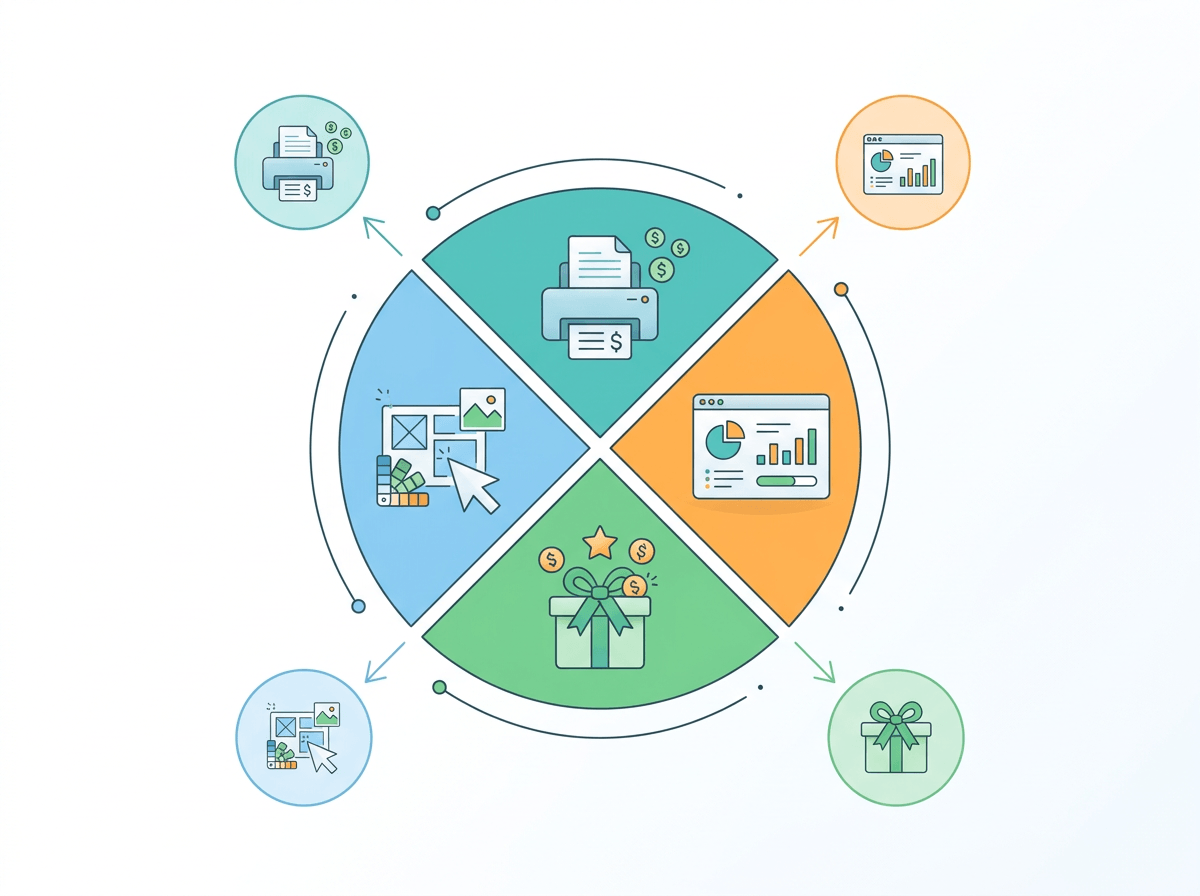
Loyalty program software costs range from $20 to $500+ per month depending on the type. Digital stamp card platforms start at $20 to $50 per month for small businesses. Points-based systems run $100 to $300 per month. Custom-built loyalty apps cost $5,000 to $50,000 upfront plus $500 to $2,000 per month in maintenance. For most small businesses, a digital stamp platform delivers the best value.
Here is the realistic pricing landscape:
Digital Stamp Card Platforms
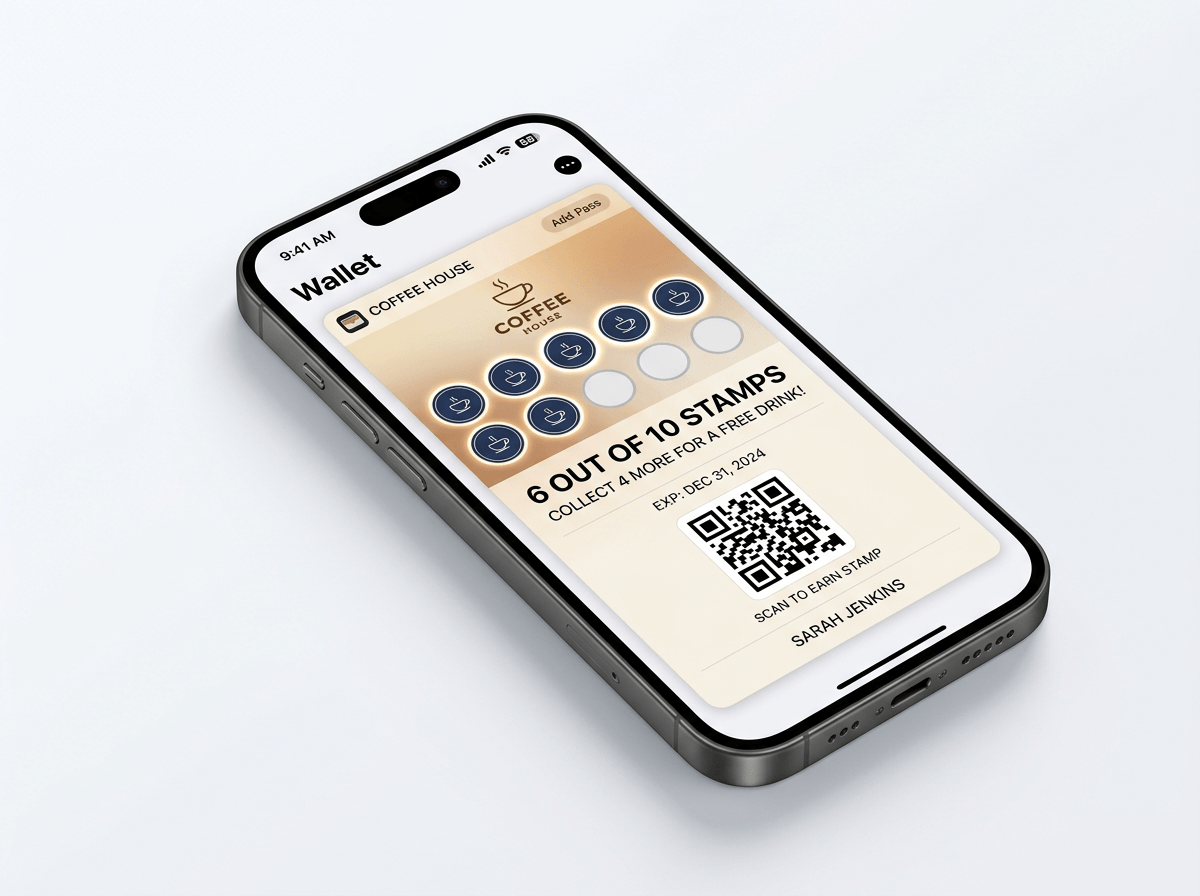
- Monthly cost: $20 to $70
- Setup fee: usually none
- Cards delivered via Apple Wallet and Google Wallet
- Includes push notifications, analytics, customer management
- No app for customers to download
- Example: a cafe paying $35/month for unlimited digital stamp cards
Points-Based Loyalty Software
- Monthly cost: $100 to $300
- Setup fee: $0 to $500
- Requires POS integration
- More complex configuration
- Often charges per location
- Example: a retail chain paying $200/month across 3 locations
Custom Loyalty App Development
- Development cost: $15,000 to $50,000
- Monthly maintenance: $500 to $2,000
- Timeline: 3 to 6 months to launch
- Requires ongoing developer support
- Full customization but full responsibility
- Example: a franchise investing $30,000 in a branded loyalty app
Enterprise Loyalty Platforms
- Monthly cost: $500 to $5,000+
- Setup fee: $1,000 to $10,000
- Advanced segmentation, multi-tier, CRM integration
- Designed for chains with 50+ locations
- Overkill for small businesses
The pattern is clear: complexity drives cost. A stamp card platform that does one thing well costs a fraction of a system that does everything. For businesses understanding the different types of loyalty programs, the type you choose directly determines your software budget.
What Does the Reward Actually Cost?
The reward cost in a stamp-based loyalty program typically runs 3% to 8% of the revenue earned during each reward cycle. For a cafe where the reward is a free drink after 10 purchases, the ingredient cost of that drink ($1.50 to $2.50) against $50 to $80 in revenue earned represents a 3% to 5% cost. This is significantly cheaper than blanket discounts, coupons, or cashback programs.
Let us work through three real scenarios:
Cafe Example
- Stamp value: $5
- Target: 10 stamps
- Reward: free drink (ingredient cost $2)
- Revenue to earn reward: $50
- Reward cost percentage: 4%
Bakery Example
- Stamp value: $8
- Target: 8 stamps
- Reward: free box of pastries (ingredient cost $5)
- Revenue to earn reward: $64
- Reward cost percentage: 7.8%
Salon Example
- Stamp value: $30
- Target: 8 stamps
- Reward: free basic service (cost to salon $15)
- Revenue to earn reward: $240
- Reward cost percentage: 6.25%
Compare these numbers to alternatives. A 10% discount applied to every transaction costs 10% of all revenue, not just the revenue from loyal repeat customers. A cashback program at 5% costs 5% on every single purchase with no completion threshold. Stamp-based loyalty concentrates the reward cost on customers who have proven their loyalty through repeated purchases.
What Are the Hidden Costs Nobody Mentions?
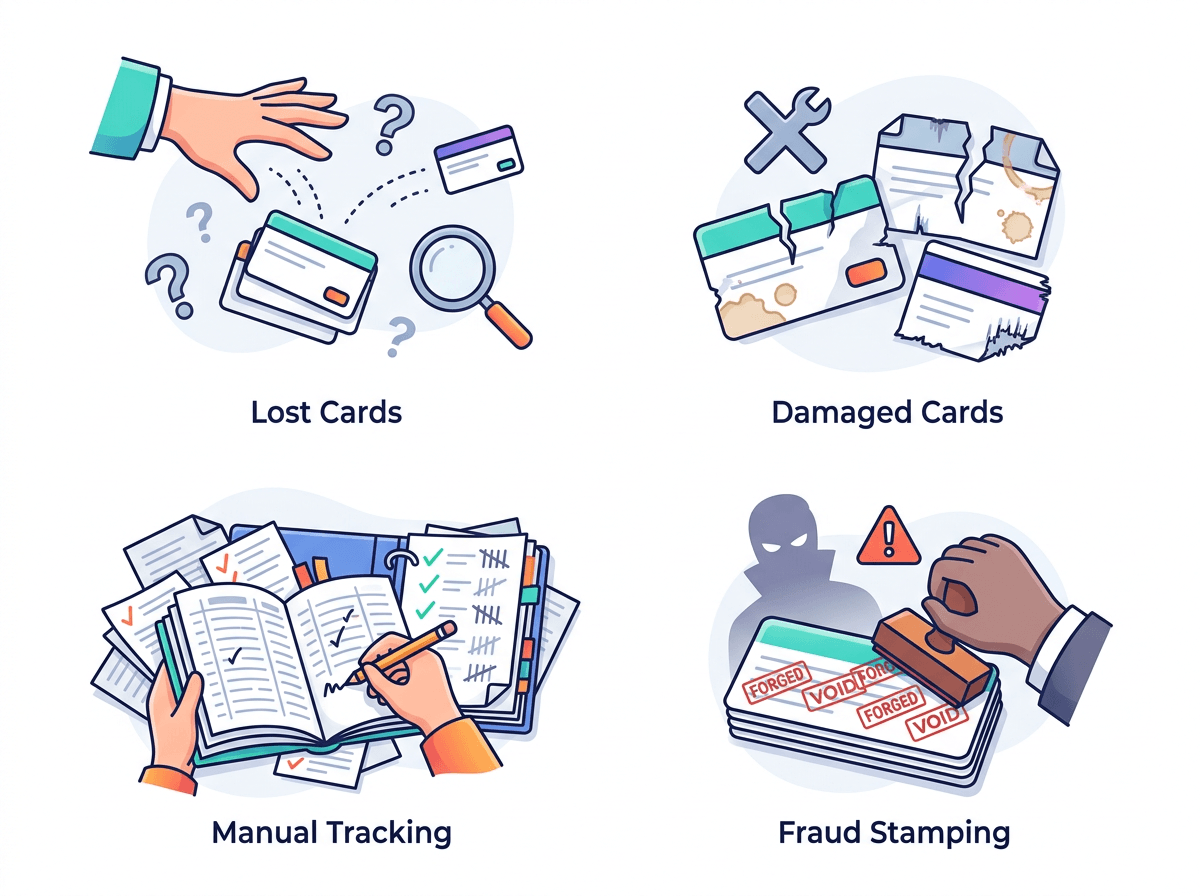
The hidden costs of loyalty programs include staff training time, customer support for technical issues, reward abuse management, and the opportunity cost of choosing the wrong platform. These soft costs can exceed the software subscription if the program is overly complex. The simplest programs have the lowest hidden costs because there is less to go wrong, less to explain, and less to manage.
Staff Training
Every employee needs to understand how the program works. For a simple stamp card, training takes 5 minutes: "scan the QR code after payment." For a points system with redemption tiers and special promotions, training takes hours and needs refreshing when rules change.
Customer Questions
"How many points do I have?" "When do my points expire?" "Why did my tier drop?" Every complexity layer generates support questions. Stamp cards generate almost zero questions because progress is visible and the rules are obvious.
Reward Abuse
Some customers will try to game the system. With stamps tied to purchase amounts and cooldown periods between stamps, abuse is nearly impossible. With flexible points systems, customers find loopholes: splitting orders, returning items after points are earned, sharing accounts. Each loophole needs a policy, and each policy needs enforcement.
Platform Migration
Choosing the wrong platform means migrating later. Migration means losing customer data, resetting progress, and re-earning trust. The cost of switching is not just the new subscription. It is the months of momentum lost during the transition.
How Do You Calculate the ROI of a Loyalty Program?
Calculate loyalty program ROI by comparing the incremental revenue from increased visit frequency against the total program cost (software + rewards). If your loyalty members visit 25% more often with an average order of $10, each member generates $30 extra per month. Against a $35/month platform cost for hundreds of members, the ROI is measurable within the first month.
The formula:
Monthly ROI = (Extra visits per member x Average order value x Number of active members) - (Monthly software cost + Monthly reward cost)
Example calculation for a cafe:
- Active loyalty members: 150
- Extra visits per member per month: 1.5 (25% increase from baseline of 6)
- Average order: $6
- Extra monthly revenue: 150 x 1.5 x $6 = $1,350
- Monthly software cost: $35
- Monthly reward cost (4% of loyalty revenue): $54
- Total monthly cost: $89
- Net monthly gain: $1,261
Even cutting the extra visit estimate in half, the program pays for itself many times over. The benefits of loyalty programs extend beyond direct revenue to include customer data, reduced marketing spend, and higher average order values.
What Is the Cost Comparison by Program Type?
| Cost Factor | Digital Stamps | Points System | Custom App | Enterprise |
|---|---|---|---|---|
| Monthly software | $20-70 | $100-300 | $500-2,000 | $500-5,000+ |
| Setup fee | $0 | $0-500 | $15,000-50,000 | $1,000-10,000 |
| Reward cost | 3-8% of cycle | 5-15% variable | 5-15% variable | 3-10% variable |
| Staff training | 5 minutes | 1-2 hours | 2-4 hours | 4-8 hours |
| Customer support load | Minimal | Moderate | High | High |
| Time to launch | Same day | 1-4 weeks | 3-6 months | 1-3 months |
| POS integration needed | No | Usually | Yes | Yes |
| Best for | 1-5 locations | 3-20 locations | 10+ locations | 50+ locations |
Can You Launch a Loyalty Program With Zero Budget?
You can launch a basic paper punch card program with near-zero budget, but the results will be proportionally limited. Paper cards get lost, cannot send notifications, provide no customer data, and are easy to counterfeit. The minimum effective investment for a digital loyalty program is $20 to $50 per month, which delivers measurable results that paper cards cannot match.
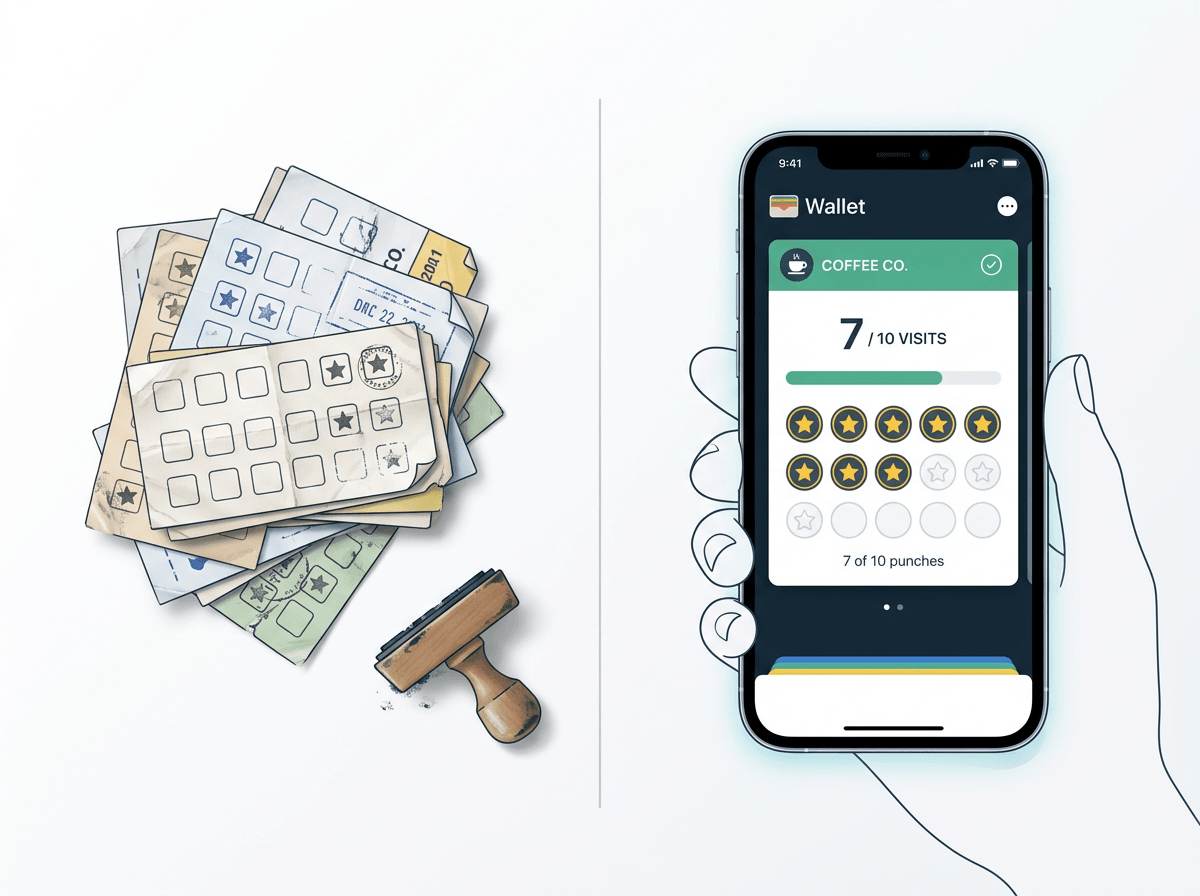
The temptation to start with paper is understandable. Print 500 cards for $30 and hand them out. But here is what happens:
- 40% to 60% of paper cards are lost before completion
- You have zero data on who your customers are
- You cannot send reminders or notifications
- Counterfeiting is trivial (a hole punch costs $3)
- There is no way to measure if the program is working
A $35/month digital platform eliminates every one of these problems. Cards live in the customer's phone and cannot be lost. You see exactly who visits, how often, and how much they spend. Push notifications bring customers back. And the data tells you whether the program is generating ROI or needs adjustment.
For the detailed comparison, see why digital loyalty cards beat paper.
How Should a Small Business Budget for a Loyalty Program?
A small business should budget $30 to $70 per month for loyalty platform software plus 3% to 8% of loyalty-generated revenue for rewards. For a business with 100 to 200 active loyalty members, total monthly cost runs $80 to $200. This investment typically generates $500 to $2,000 in incremental monthly revenue, making loyalty programs one of the highest-ROI marketing investments available to small businesses.
The practical budget breakdown:
- Month 1: Software subscription + zero reward costs (nobody has completed a cycle yet)
- Month 2-3: Software + first rewards kicking in as early adopters complete cycles
- Month 4+: Steady state where software cost and reward cost are predictable
- Annual budget: $600 to $2,400 for a typical small business with one location
Compare this to other marketing costs:
- Google Ads for a local business: $300 to $1,000/month (acquires new customers who may not return)
- Social media advertising: $200 to $800/month (awareness, not retention)
- Loyalty program: $50 to $200/month (retains existing customers who spend more)
The loyalty program is not competing with advertising. It is complementing it. Ads bring customers in the door. The loyalty program makes sure they come back.
Frequently Asked Questions
Digital stamp card platforms offer the lowest entry point at $20 to $50 per month with no setup fees. Cards are delivered through Apple Wallet and Google Wallet, eliminating printing costs. Most platforms include push notifications and analytics. You can launch the same day you sign up with zero technical knowledge required.
Budget 3% to 8% of loyalty-generated revenue for rewards. For a business generating $5,000/month from loyalty members, expect $150 to $400 in reward costs. This is not an additional expense -- it replaces less effective marketing spend. The reward cost is funded by the incremental revenue the program generates.
For most small businesses, no. Custom apps cost $15,000 to $50,000 to build and $500 to $2,000 per month to maintain. They require 3 to 6 months to launch. The biggest problem: customers must download your app, and download rates for single-store apps are extremely low. Digital wallet-based loyalty cards bypass this entirely.
Most digital stamp programs reach positive ROI within 30 to 60 days. The software cost is fixed and low. The reward cost only kicks in when customers complete cycles, which means revenue has already been earned. By month two, the incremental revenue from increased visit frequency typically exceeds total program costs by 5x to 10x.
Not for stamp-based digital programs. Staff scan a QR code or enter the purchase amount manually. The process takes seconds and works alongside any existing POS system. Points-based and enterprise programs typically require POS integration, adding cost and complexity to the setup process.
Some platforms offer free tiers with limited features. However, free plans typically restrict the number of customers, remove branding customization, and exclude push notifications. The difference between a free plan and a $30/month plan is usually the difference between a program that exists and a program that works.